Riichi Endgames: Free Riichi Mahjong Puzzles
Riichi mahjong puzzles on a 3D table, each with one provable answer: pick the discard with the most live tiles, or the one tile that is safe against a riichi.
Quick facts
- Category
- 🧩 Puzzle
- Price
- Free, no download or sign-up
- Plays on
- Computer, phone and tablet
- Screen
- Landscape
- Provided by
- After School Play
- Added
About Riichi Endgames: Riichi Mahjong Puzzles
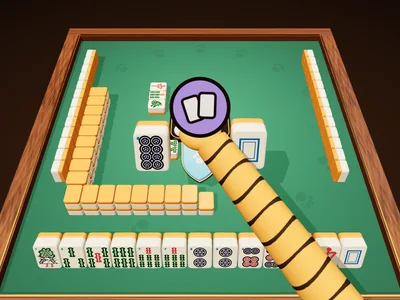
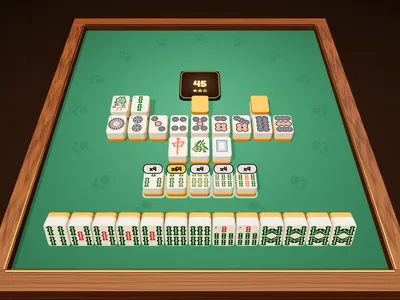
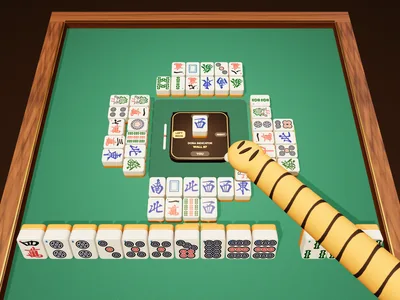
Riichi Endgames is a riichi mahjong puzzle game built the way chess players train endgames. Every puzzle is a single moment from a real-looking four-player hand: all four discard piles lie on a 3D table, the dora indicator sits on the console in the middle, you have just drawn your 14th tile, and you have to decide what to throw. Tap one tile and your tiger paw lays it in your discard pile. There is exactly one correct answer, and the game can prove it.
There are two kinds of puzzle. In attack puzzles you are close to winning and must pick the discard that leaves the most live winning tiles. A tile is live if you cannot see it anywhere: not in your hand, not in any discard pile, not as the dora indicator. The wait that looks widest on paper often loses, because three of its tiles are already sitting in the rivers. Early levels ask you to choose between ready (tenpai) hands; from level 41 you work one step earlier, at 1-shanten, and count every tile that would make you ready, which is what riichi players call acceptance or ukeire. It is a mahjong efficiency trainer that counts the table, not just your hand.
In defense puzzles an opponent has declared riichi, their declaring tile turned sideways, and you must find the one tile in your hand that is 100% safe. Riichi rules make that provable through furiten: a player can never win off a discard of a tile they already threw themselves (genbutsu), and after a riichi they can never win on a tile they let pass when someone else threw it. The game makes sure exactly one tile in your hand qualifies. Suji tiles, the classic one-to-four-to-seven reading, look tempting and show up as decoys in the later levels, but suji only rules out one two-sided wait, so they are never 100% safe. When you pick one, the game shows you a wait the riichi player could be holding that wins on it.
After every puzzle a Why? screen explains the answer. For attack it lists each candidate discard with its waits, greys out every copy already seen and rings those copies on the table. For defense it circles the safe tile in the right discard pile and shows a wait that beats every other tile you could have thrown. New terms such as tenpai, genbutsu, furiten and suji get a one-line definition the first time they appear.
The 80 main levels climb from obvious waits to close calls and from simple genbutsu to tiles passed after the riichi, and mixed drills continue beyond them. A daily puzzle, the same for everyone, makes a good warm-up and a good thing to share. Answers on the first try earn the most points, and your total goes to the leaderboard. It is free, needs no download or sign-up, and plays with a mouse or by touch.
Want more? Browse Puzzle games.
How to Play
- Look at the table: four discard piles around the middle, the dora indicator on the centre console and your 14 tiles standing at your edge.
- Read the question. Gold levels are attack: find the discard that leaves the most live winning tiles. Blue levels are defense: an opponent declared riichi and you must find the one tile that is 100% safe.
- Tap a tile in your hand to discard it, and your tiger paw lays it in your discard pile. There is no confirm button, so count before you tap.
- A wrong pick comes back to your hand greyed out, with a short reason, and you can try again for fewer stars. After two misses you can show the answer.
- Open Why? to see the full breakdown: live copies per wait for attack, and for defense the safe tile ringed in its discard pile plus a wait that wins on every other tile.
- Go on to the next level, or play the daily puzzle from the menu.
Tips
- Count every copy you can see: your own hand, all four rivers and the dora indicator. Four minus that is what is left to win on.
- A two-sided wait is not always better. If three of its tiles are already out, a closed wait on untouched tiles can beat it.
- In defense, read the riichi player's own discards first. Any of those tiles in your hand is genbutsu and can't deal in.
- Tiles discarded after the riichi are marked with a gold line. If the riichi player didn't win on one, it is safe for the rest of the hand.
- Suji is not safe. A tile three away from a discard still loses to closed, edge, single and double-pair waits, and to the other two-sided wait.
FAQ
- Is Riichi Endgames free?
- Yes. It is free to play in any modern browser, with no download and no sign-up.
- Which mahjong rules does it use?
- Japanese riichi mahjong with four players and 136 tiles. A complete hand is four sets and a pair, or seven pairs. You are always closed and able to riichi, so any win counts; red fives and thirteen orphans are not used yet.
- How can a puzzle have only one right answer?
- Attack answers are counted: every candidate discard is scored by its live winning tiles, and a level is only used if one discard clearly beats the rest. Defense answers rest on furiten: the riichi player can't win on their own discards or on tiles passed after their riichi, and for every other tile in your hand the game builds a real hand that wins on it.
- What are genbutsu and suji?
- Genbutsu is a tile the riichi player has already discarded, so they can't win on it. Suji is a tile three steps from a discard, like 4 after a 1. Suji only rules out one two-sided wait, so it lowers the risk but is never 100% safe.
- Is there a daily puzzle?
- Yes. The daily puzzle changes at midnight UTC and is the same for everyone, and you can copy your result to share it.
- Can I play it on a phone?
- Yes. It works with touch in a mobile browser. With the phone held upright, the answer panel moves under the table and your hand splits into two rows of larger tiles.