Count live tiles: four minus what you can see
Every tile in riichi mahjong has four copies. A wait is only as good as the copies still out there: the ones that aren't in your hand, in anyone's discards or showing as the dora indicator. Those are the live tiles, and they're the number that matters.
Counting gets quick once it's a habit. For each tile you'd win on, start at four, then subtract the copies in your own hand, the copies in all four discard ponds and the dora indicator if it's that tile. Tiles hidden in other players' hands or in the wall still count as live: you can't see them, so they might still come to you.
Posed as a puzzle (here's a hand, pick the discard), this is what Japanese players call 何切る, nani kiru, "what do you cut?". The examples below are real puzzles from Riichi Endgames: Riichi Mahjong Puzzles, and every count comes from its engine, which proves that each puzzle has exactly one best answer.
Take the many-sided wait over the single-tile wait







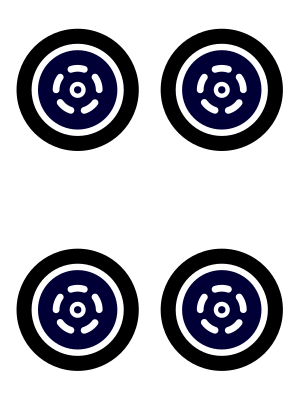
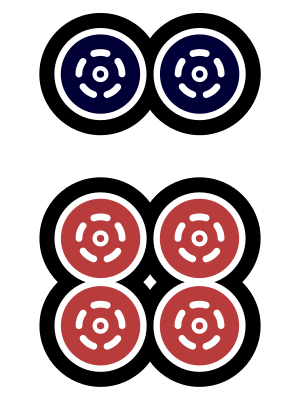


Two discards make this hand ready (tenpai). Throw the 6p and you're waiting on a single tile, the 2m, with three copies left. Throw the 2m instead and the pin tiles join into one shape that wins on 5p, 6p, 7p or 8p: eight live tiles.
A single-tile wait (tanki) is sometimes right, but only when nothing better exists. When the rest of your hand can form a shape with several winning tiles, let the lonely tile go.
The trap: more waits on paper can lose


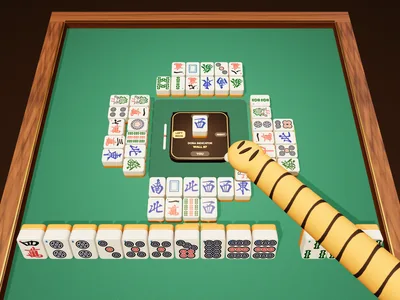
Throw the 4p and your man tiles wait on 1m, 2m, 4m or 7m. Four different winning tiles and thirteen copies not in your hand: it looks like the obvious choice. Throw the 2m instead and you wait on 2p, 4p or 5p, just three tiles.
Now count what you can see. Between your own hand and the discard ponds, two copies each of 1m, 2m, 4m and 7m are accounted for, so the four-sided wait has only 8 live tiles. Nobody has discarded a 2p, 4p or 5p, so the smaller wait has 11. The 2m discard wins by three tiles.
This is the most common way a strong-looking hand loses. The shape on paper is only the starting point; the table decides what it's worth.
Never wait on a dead tile


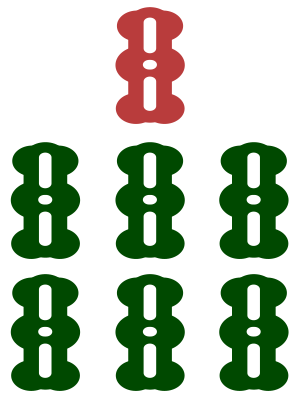

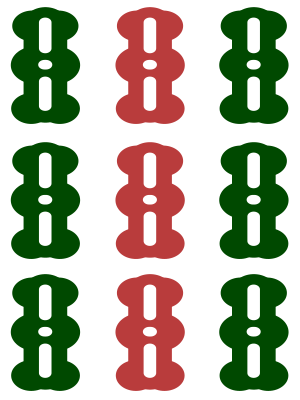
Throw the 8p and you're ready on 6s or 9s. Throw a 9s and you're ready on 7p or 8p. On paper they're close: seven tiles against six.
But you hold two 9s yourself, and the other two are already in the discards. That half of the wait is dead: a 9s can never come. The 8p discard is left with 2 live tiles, against 6 for throwing a 9s.
A dead wait looks like a real one until you count. Before you settle on a wait, glance at the ponds for its tiles. If all four copies are visible, it isn't a wait.
One step from ready: count acceptance, not shapes
When no discard makes you ready yet (one step away, called iishanten), the question changes: which discard leaves the most live tiles that would make you ready? That count is your acceptance (ukeire).



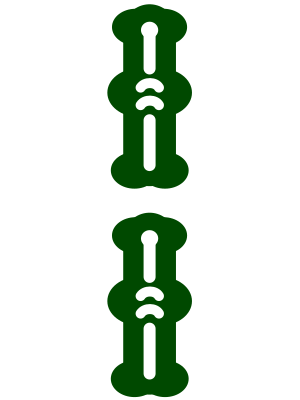

The loose sou tiles are the choice: keep the 2s next to your pair of 1s, or the lonely 5s? The 2s looks connected, but it needs a 1s or a 3s, and between your hand and the ponds three 1s and all four 3s are visible. The 5s needs a 3s, 4s, 6s or 7s, and most of those are still out there.
Throw the 2s and 32 live tiles would make you ready. Throw the 5s and only 24 would. Keep the tile whose partners are still alive.
Cut the tile that connects to nothing
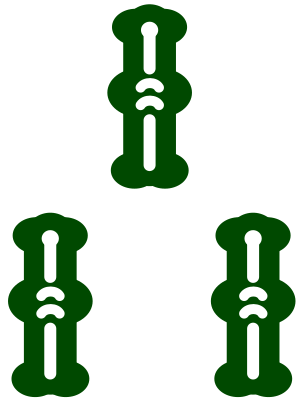

The single White dragon doesn't touch anything in this hand. Throw it and 34 live tiles, across twelve different kinds, would make you ready. The next best discard, a 3s, leaves 25.
Early in a hand, isolated honors and lonely terminals (the 1 and 9 of each suit) are usually the first to go. They can only grow into a pair or a triplet, while a middle tile like a 5 can connect in both directions. A pair of dragons is a different story: a dragon triplet is a yaku on its own, so that pair is worth keeping.
Check your own discards before you settle (furiten)
One rule can turn a good wait bad: if any tile you're waiting on is in your own discard pile, you're furiten. You can't win off another player's discard (ron) at all, only by drawing a winning tile yourself (tsumo).
So before you choose between two ready shapes, look at your own pond. A wait on 2m and 5m isn't worth much if you threw a 5m three turns ago. Sometimes the slightly narrower wait that isn't furiten is the better hand.
Know when to stop: defense beats efficiency
Everything above is about speed. Once another player declares riichi and your hand is still far from ready, the best discard is often the safest one, not the most efficient.
Two kinds of tile are completely safe against a riichi: tiles the riichi player has discarded themselves (genbutsu), and tiles someone discarded after the riichi that the riichi player didn't win on. Suji, a tile three steps from one they discarded, is often called safe, but it isn't guaranteed. The defense levels in Riichi Endgames are built to catch exactly that mistake.
Practice ten minutes a day
These habits become automatic with short, regular practice.
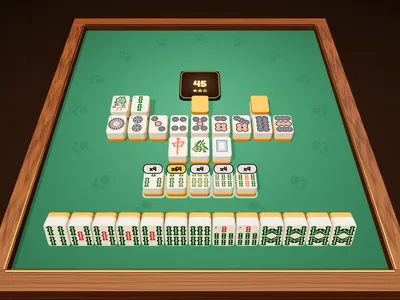
Warm up with a few levels of Which Tile Wins? Mahjong Puzzles: you see a hand one tile from winning and find every tile that completes it. It trains you to spot all the waits, including the hidden ones.
Then play a handful of Riichi Endgames: Riichi Mahjong Puzzles levels. Levels 1 to 20 are wait choices like the examples above, 41 to 60 are one-step-from-ready acceptance, and 21 to 40 and 61 to 80 are defense. Finish with the daily puzzle: everyone gets the same one each day, and your score goes on the leaderboard.
FAQ
- What does 何切る (nani kiru) mean?
- It's Japanese for "what do you cut?" and names the classic mahjong problem: here's a 14-tile hand, which tile do you discard? The answer can depend on speed (tile efficiency), the hand's value or safety, and good problems make you weigh them.
- What is tile acceptance (ukeire)?
- The number of live tiles that would move your hand one step closer to winning, or make it ready. Compare it across your possible discards and keep the hand with the highest count.
- Is the widest wait always the best?
- No. Count live tiles, not kinds of tile: a four-sided wait whose tiles are mostly visible can lose to a three-sided one, as level 14 above shows. Hand value and safety matter too.
- Are these tips enough to win at riichi mahjong?
- They get you ready faster, which wins more hands. Strong play also weighs points (dora and yaku) and when to fold, so treat efficiency as the foundation rather than the whole game.